
Click-through rate is the silent gatekeeper of your entire ad funnel. In Q4, when impressions skyrocket and ad costs climb, CTR becomes the single most decisive metric separating sellers who scale from those who burn budget and wonder why nothing converts.
- CTR is the ignition key of the sales funnel; nothing converts until the shopper clicks, making it the most critical early metric in Q4
- Buyer psychology drives clicks through four triggers, trust, visual storytelling, urgency, and price perception
- Creative quality, including main images, titles, and Sponsored Brand headlines, is the single most controllable CTR lever available to sellers
- Pricing psychology (badges, coupons, strike-through pricing) can boost CTR by up to 40 percent during peak holiday traffic
- Higher CTR creates a compounding advantage, lower CPCs, better placements, stronger organic rank, and improved TACoS
Introduction
Click-Through Rate (CTR) is one of the most misunderstood metrics in marketplace advertising. Sellers often treat it as a surface-level vanity number, something to check on a dashboard but rarely act on. In reality, CTR is the gatekeeper that decides whether your campaigns even have a chance of succeeding.
In Q4, when holiday traffic floods platforms and impressions skyrocket, CTR becomes your most critical early-warning signal. Sellers who ignore it risk losing visibility, wasting ad spend, and handing over clicks that should have been theirs to better-prepared competitors. Those who master it gain a compounding advantage: lower cost-per-click, stronger organic placement, and a funnel that actually works.
The psychology behind a click is deceptively simple. Shoppers scan dozens of options in seconds and make split-second decisions based on visuals, titles, reviews, and price. If you don't win that micro-moment, no amount of backend optimization can save you. CTR is the story your listing and ads tell at first glance.
In 2026, CTR is no longer static. AI-driven ad placements, mobile-first shopping behaviors, and seasonal intent signals make it highly dynamic. Sellers who align their strategies with Q4 buyer psychology can turn CTR from a weakness into their most reliable growth engine.
This guide breaks down exactly why CTR matters more in Q4 than at any other time of year, what truly drives it, and how to systematically engineer campaigns and listings that win the click before your competitors do.
1. Why CTR Is the Gateway to Q4 Sales
CTR isn't just about getting more shoppers to click. In Q4, it is a survival metric. Every seller is competing for the same finite pool of buyers, but ad inventory doesn't expand to match demand. It simply becomes more expensive. Sellers with below-average CTRs pay more for less, while the algorithm rewards those who attract strong engagement with better placements and lower costs.
What many sellers don't realize is that CTR influences far more than campaign efficiency. It directly affects organic ranking. A strong CTR signals relevance and consumer interest, which accelerates rank velocity. In Q4, when every ranking position can be the difference between selling out and stagnating, CTR is the earliest and most critical metric to protect.
Sponsored Product impressions can grow by 50 to 80 percent in November and December, but if CTR doesn't keep pace, sellers end up spending heavily on visibility with very little to show for it in actual clicks. High impressions with low CTR equals wasted opportunity, plain and simple.
Think of CTR as the ignition key of your sales funnel. Nothing else happens until the shopper clicks. Even a 0.5 percent improvement in CTR during Q4 can translate into thousands of dollars in incremental revenue, compounded across weeks of peak traffic.
Sellers who ignore CTR are building their Q4 campaigns on sand. Everything else collapses without it.
2. The Psychology Behind the Click
Shoppers don't consciously think about CTR. But every click is a direct reflection of psychological triggers firing in a fraction of a second: trust, curiosity, urgency, and value perception. In Q4, with shoppers under time pressure and flooded with options, these triggers are amplified to their peak.
Trust eliminates doubt. A product with 1,200 reviews at 4.6 stars will almost always outperform a similar product with 50 reviews at 4 stars, regardless of price. Social proof removes hesitation at the very first glance. Holiday shoppers don't have time to research, so they default to what looks reliable and widely endorsed.
Visuals process faster than words. Research consistently shows that the human brain processes images roughly 60,000 times faster than text. Your main image is the single most powerful CTR lever you control. Lifestyle images that showcase gifting contexts, a product in festive wrapping, held by someone at a holiday gathering, signal seasonal relevance instantly and drive far more clicks than standard white-background shots alone.
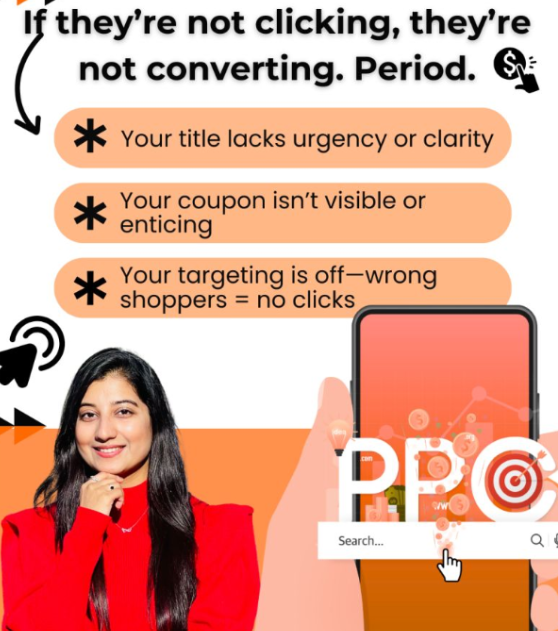
Urgency triggers action. Phrases like "limited stock," "holiday exclusive," or "deal ends tonight" embedded in titles or promotions tap into loss aversion, one of the most powerful behavioral drivers in consumer psychology. Shoppers in Q4 are acutely aware that deals vanish quickly and that delivery windows close. Listings and ads that reflect this urgency outperform those that don't.
Clarity prevents paralysis. Overloaded titles or cluttered visuals create cognitive friction, and friction kills clicks. Buyers want a fast, clear answer to two questions: What is this, and why should I care right now? Listings that answer both within three seconds consistently outperform those that bury the lead in keyword stuffing.
Price perception closes the gap. Seeing a visible discount badge or strike-through pricing in search results often tips the decision before a buyer even reads your title. Pricing psychology is not just a conversion tool. It is a CTR driver. Sellers who understand this capture clicks that competitors never even compete for.
3. CTR Benchmarks: What Good Looks Like in 2026
Knowing your benchmarks is the first step in diagnosing underperformance. CTR varies significantly depending on ad format, device, category, and placement.
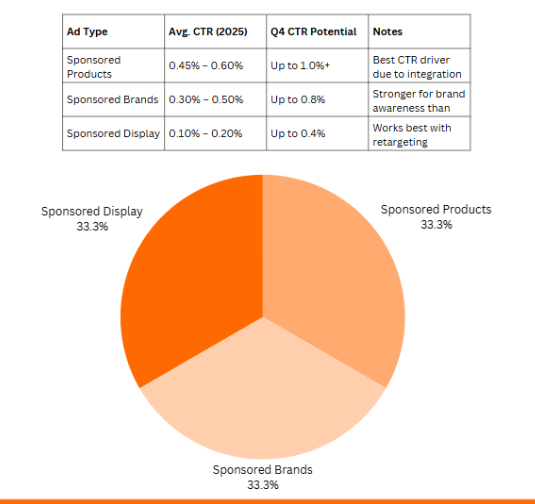
For marketplace Sponsored Product ads, strong performers typically achieve CTRs in the 0.4 to 0.6 percent range, as these ads blend naturally into search results and intercept high-intent shoppers. Sponsored Brand placements run slightly lower, averaging 0.3 to 0.5 percent, but deliver stronger brand discovery and upper-funnel impact. Sponsored Display ads lag further behind, often under 0.2 percent, due to their more interruptive nature and lower contextual relevance.
Across broader ecommerce channels, industry data from 2026 shows that Google Search ads average around 3.17 to 6.66 percent CTR depending on the vertical, while display ads average 0.46 percent globally. Email marketing in retail ecommerce averages 2.6 percent, with personalized sequences often reaching 5 to 7 percent.
Device plays a significant role too. Mobile CTRs consistently outperform desktop, because the mobile browsing experience forces faster, more visual decision-making. In Q4, when over 75 percent of holiday shoppers are on mobile, creative designed for smaller screens delivers meaningfully better performance.
Category dynamics matter as well. Fashion, beauty, and electronics see higher CTRs due to strong visual storytelling. Commoditized categories like office supplies tend to lag. Always benchmark against your specific category, not a broad platform average. If your CTR is consistently below benchmark, it is a signal that your creative, positioning, or targeting needs a fundamental rethink, not just minor adjustments.
4. Creative: The Most Powerful CTR Lever You Control
Creative is where CTR is won or lost. Shoppers are bombarded with hundreds of options and use visuals as the primary filter to decide which products deserve a closer look. Yet many sellers treat creative as an afterthought, uploading basic images and writing functional but uninspiring titles.
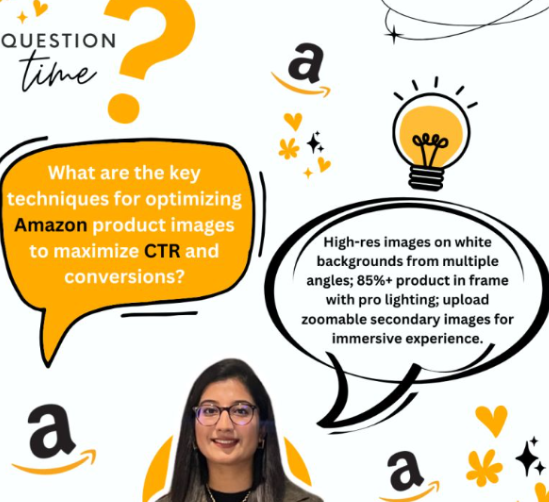
Main images must do more than comply. Clean backgrounds are required, but that doesn't mean they should be boring. Optimizing angles, lighting, and product proportions alone can boost CTR by 20 to 30 percent. In Q4, adding contextual seasonal elements within guidelines, festive props, warm tones, gifting contexts, can dramatically increase click appeal by aligning with what shoppers are already picturing in their minds.
Titles must balance SEO and human readability. A title packed with keywords but stripped of clarity alienates shoppers instantly. The best titles surface the most important benefit within the first 80 characters and include a seasonal modifier that signals holiday relevance. Buyers decide in under three seconds. Your title must speak to them before they move on.
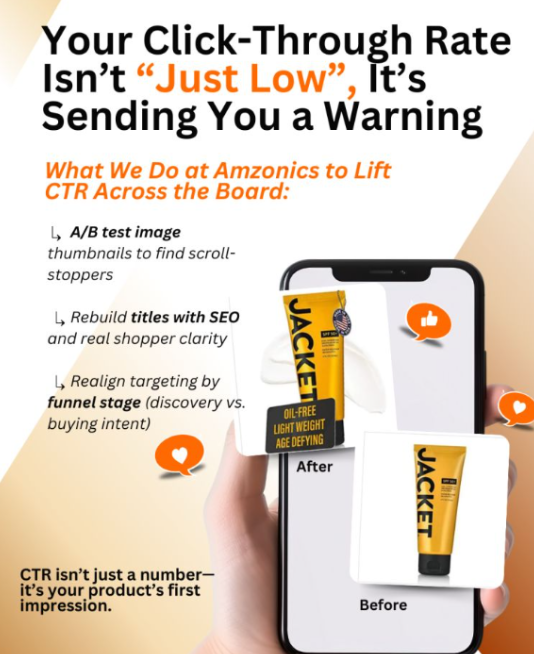
Sponsored Brand creatives offer unique CTR leverage. Custom headlines, brand logos, and curated product sets allow sellers to tell a story at the search level, before a buyer ever reaches the product page. Sellers who run multiple creative iterations and test emotionally resonant seasonal language see significantly higher CTRs compared to those running static, generic campaigns. A/B testing Sponsored Brand headlines weekly in Q4 is one of the highest-leverage activities available.
Trust signals before the click. Adding review counts, best-seller badges, and delivery guarantees to your title or ad copy pre-empts buyer doubt. Research shows that omitting visible trust signals can reduce CTR by up to 37 percent on product-focused placements. Don't wait for shoppers to reach your listing to build confidence. Build it in the search result.
5. Pricing and Promotions: CTR's Secret Weapon
Price is not just a conversion factor. It is a CTR driver. Shoppers often decide to click based on perceived value long before evaluating the full listing. In Q4, when deal badges dominate search results, pricing psychology becomes one of the most decisive levers a seller can pull.
Discount visibility matters more than the discount size. Platforms automatically highlight strike-through pricing and percentage discounts, both of which capture attention before a shopper reads your title. A product listed at a slightly higher price with a visible discount badge often outperforms a cheaper competitor with no visible promotion. The badge itself creates trust and urgency simultaneously.
Coupon badges are CTR magnets. Green coupon badges draw the eye immediately, signaling savings before the shopper has processed any other information. Research indicates coupons can increase CTR by as much as 40 percent in competitive categories during the holiday season.
Lightning Deals and time-bound promotions amplify urgency. A countdown timer or limited-availability message activates loss aversion directly in the search result. In Q4, when buyers know deals vanish and delivery windows close fast, these promotions become some of the most powerful CTR tools available.
Price anchoring shapes perception. Showing a higher original price beside a discounted price creates a perception of value even when the discount is modest. The contrast convinces buyers they are looking at a deal worth investigating, which drives the click.
Promotional strategy in Q4 should not be continuous. Strategically spaced promotions maintain urgency without training buyers to wait for discounts.
6. CTR and PPC Efficiency: The Multiplier Effect
CTR isn't just a creative metric. It directly determines the efficiency of every dollar you spend on ads. The marketplace algorithm rewards higher CTR campaigns with lower CPCs, because ads that attract clicks generate more value per impression for the platform. Sellers who ignore CTR often find themselves paying inflated bids for the exact same traffic competitors are reaching more cheaply.
In Q4, when CPCs rise 20 to 40 percent across most categories, CTR becomes your most effective cost-management tool. A seller with a 0.8 percent CTR can sustain profitable campaigns at competitive bid levels. A seller with 0.3 percent CTR burns through budget at the same bid without generating comparable returns.
Higher CTR also improves placement. Sponsored Products with above-average CTRs are significantly more likely to appear in premium "Top of Search" positions. This creates a compounding feedback loop: better placement drives more clicks, stronger CTR lowers CPCs, and improved organic rank drives incremental traffic at zero cost.
The cumulative effect on Total Advertising Cost of Sale (TACoS) is substantial. Improving CTR reduces wasted spend, increases organic velocity, and lowers total advertising burden across the catalog. CTR is not one metric among many. It is the multiplier that determines whether your entire PPC structure operates efficiently or bleeds money.
7. Action Plan: How to Systematically Improve CTR in Q4
Boosting CTR requires a proactive, structured approach rather than reactive firefighting. Sellers who only adjust when metrics collapse miss the opportunity to engineer consistent improvement before Q4 peaks.
Step 1: Audit your creative ruthlessly. Are your main images optimized for mobile screens? Do your titles communicate a clear benefit in the first 80 characters? Are you testing multiple Sponsored Brand headlines? Sellers who iterate on creative weekly in Q4 consistently outperform those who set campaigns and forget them.
Step 2: Optimize pricing psychology, not just price. Don't just reduce prices. Leverage badges, coupons, and discount anchoring to maximize perceived value. Strategically spaced promotions create sustainable urgency without conditioning buyers to wait.
Step 3: Sharpen targeting. Ads shown to irrelevant audiences will always depress CTR regardless of how strong the creative is. Aggressive negative keywording, audience exclusions, and intent-driven targeting ensure your ads appear where buyers are already primed to click.
Step 4: Benchmark against competitors. Use available analytics tools to understand how your CTR compares to top performers in your category. Consistent underperformance is a signal that your positioning, not just your creative, needs to change.
Step 5: Test continuously through Q4. Buyer behavior shifts week by week during the holiday season. Sellers who test new creatives, headlines, and pricing structures every seven to ten days adapt faster and capture disproportionate share during the windows that matter most.
Conclusion
CTR is not a side metric. It is the foundation upon which your entire Q4 strategy either stands or collapses. In a season defined by rising CPCs, surging impressions, and aggressive competition, CTR determines whether you even get a seat at the table.
Holiday shoppers are overwhelmed with choices, distracted by promotions, and pressed for time. The only way to break through consistently is to engineer listings and ads that earn clicks quickly. That means mastering creative, applying pricing psychology, and embedding urgency at every stage of the buyer journey.
The sellers who dominate Q4 are not the ones with the largest budgets. They are the ones who respect CTR as the engine of efficiency and build every campaign decision around improving it. Better CTR means better placements, lower CPCs, stronger organic rank, and returns that compound week over week through the entire peak season.
The core lesson is this: don't wait until Q4 is halfway through to care about CTR. Build it into your strategy now, test aggressively, and treat every click as a micro-win that compounds into holiday dominance.
---
If your Q4 campaigns are generating impressions but starving for clicks, you don't have a budget problem. You have a CTR problem.
At Brevlin, we build CTR-first strategies that turn wasted spend into profitable growth. From creative testing and pricing psychology to funnel optimization and targeting refinement, we engineer campaigns that win the click and convert it into sales.
Don't go into Q4 unprepared.
A comprehensive breakdown of click-through rate (CTR) for marketplace sellers in 2026, covering Q4 buyer psychology, creative optimization, pricing strategy, PPC efficiency, and a step-by-step action plan to systematically improve CTR before and during the holiday season.
CTR problems get misdiagnosed as bid problems all the time. If your main image and price badge do not earn the click, raising bids just makes the silence more expensive. — Maimoona Iqbal (Marketplace Growth Specialist)
Artikel fertig. Du hast gerade 12 Minuten in dein Wissen investiert.
Häufig gestellte Fragen
Strong performers typically achieve 0.4 to 0.6 percent CTR for Sponsored Products. Sponsored Brands average 0.3 to 0.5 percent, and Sponsored Display often falls below 0.2 percent. Always benchmark against your specific category rather than a broad platform average.
Rising impressions in Q4 don't automatically improve CTR. If creative, titles, and pricing haven't been updated for holiday buyer psychology, your ads will appear more often but resonate less. Sellers must actively refresh creative and leverage seasonal urgency signals to keep CTR pace with impression growth.
Weekly iteration is the standard for top-performing sellers during peak season. Buyer behavior and competitive positioning shift week by week through October, November, and December. Testing new headlines, images, and pricing structures every seven to ten days gives you a measurable edge.
Both. Coupon badges appear directly in search results and capture visual attention before a shopper reads your title or checks your price. Research shows strategically deployed coupons can boost CTR by up to 40 percent in competitive categories during holiday periods.
The marketplace ad algorithm rewards higher CTR campaigns with lower cost-per-click, since they generate more value per impression. A seller with 0.8 percent CTR can sustain profitable bids at the same level where a seller with 0.3 percent CTR burns through budget without comparable returns. Improving CTR is one of the most effective ways to control rising Q4 ad costs.


