.webp%3Fprefix%3Dcms%252Fbrevlin-site%252Fmedia&w=3840&q=75)
On August 31, 2026, the FTC and 22 state attorneys general sued the platform alleging it secretly manipulated Sponsored Ads auctions since 2019 through hidden surcharges, generating more than $20 billion in excess costs from 1.2 million advertisers. The platform denies the allegations. The lawsuit will take years to resolve. But there are specific steps sellers should take right now around record preservation, performance monitoring, and PPC strategy. This guide covers all of them.
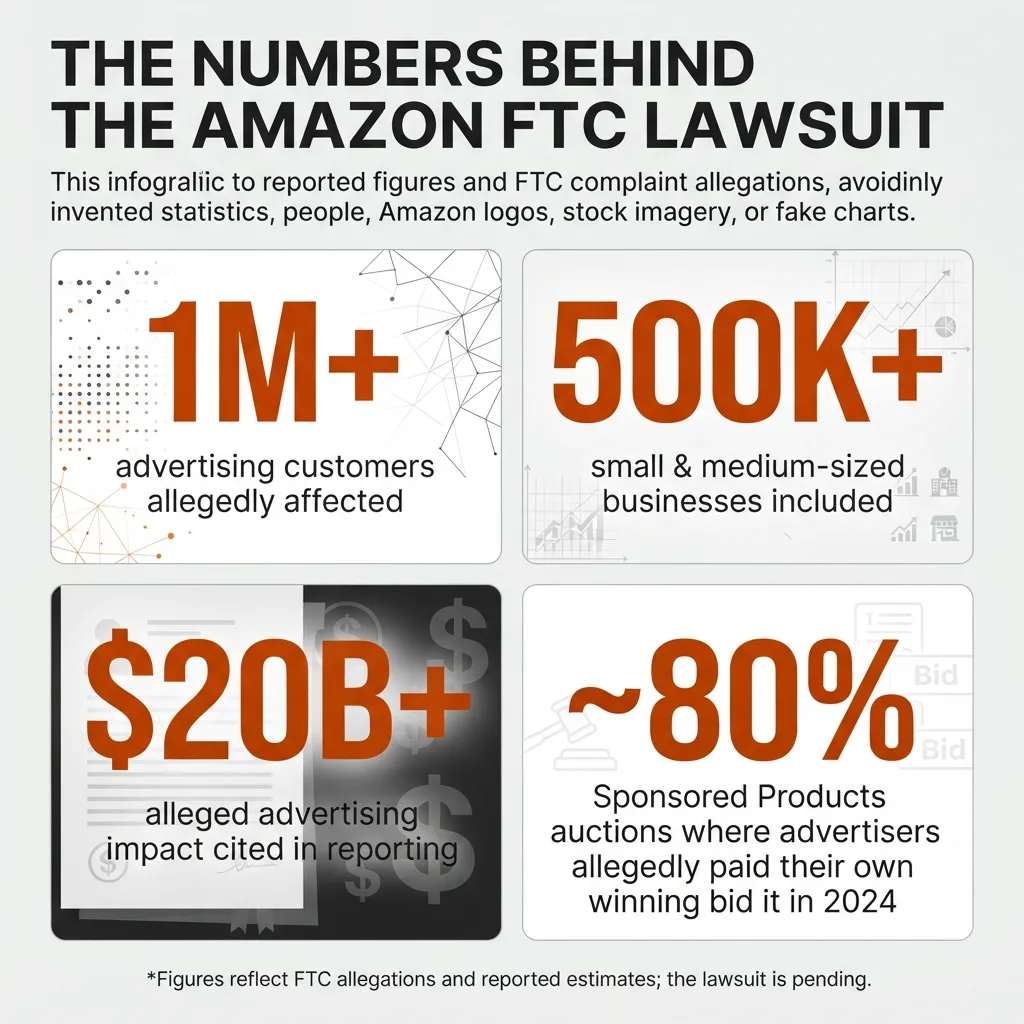
- On August 31, 2026, the FTC and 22 state attorneys general filed suit alleging the platform secretly manipulated Sponsored Ads auctions since 2019 through an undisclosed soft reserve price mechanism, generating more than $20 billion in alleged excess charges from over 1.2 million advertisers
- The platform denies all allegations, stating average winning bids fell 50 percent from 2019 to 2025, advertisers saved an estimated $8 billion from its relevancy-first model, and the system delivers 58 percent higher sales and 46 percent better ROAS than a pure-bid-price system would
- Nothing has changed in how the auction system operates today and sellers should not change their PPC strategy based on an unresolved lawsuit that will take years to reach a court ruling or settlement
- Sellers should preserve all advertising records from 2019 to present (monthly billing statements and campaign performance exports stored externally) in case a refund or restitution program is established if the FTC prevails
- The most important near-term PPC actions remain unchanged, optimize listings for CVR to reduce ACoS independent of CPC levels, manage bids against your calculated break-even ACoS, run weekly negative keyword maintenance, and monitor TACoS weekly for any broader performance signals
Amazon FTC Ad Lawsuit: What Sellers Must Know in 2026
On August 31, 2026, the Federal Trade Commission and 22 state attorneys general filed a lawsuit alleging that the platform secretly manipulated its advertising auction system, overcharging more than 1.2 million brands and sellers through undisclosed surcharges dating back to 2019.
The complaint claims the scheme generated more than $20 billion in excess costs, which the FTC argues were largely passed on to consumers through higher product prices. This is not a rumor or speculation. It is an active federal lawsuit with serious commercial implications for every seller running Sponsored Products, Sponsored Brands, or Sponsored Display campaigns.
This guide explains what the lawsuit actually alleges, what the platform says in response, how it could affect your CPC and ACoS, and exactly what your PPC strategy should look like right now.
What Happened: The FTC Lawsuit Explained
The FTC alleges the platform secretly added hidden surcharges to its advertising auctions starting in 2019, causing sellers to pay significantly more than the stated auction price without disclosure.
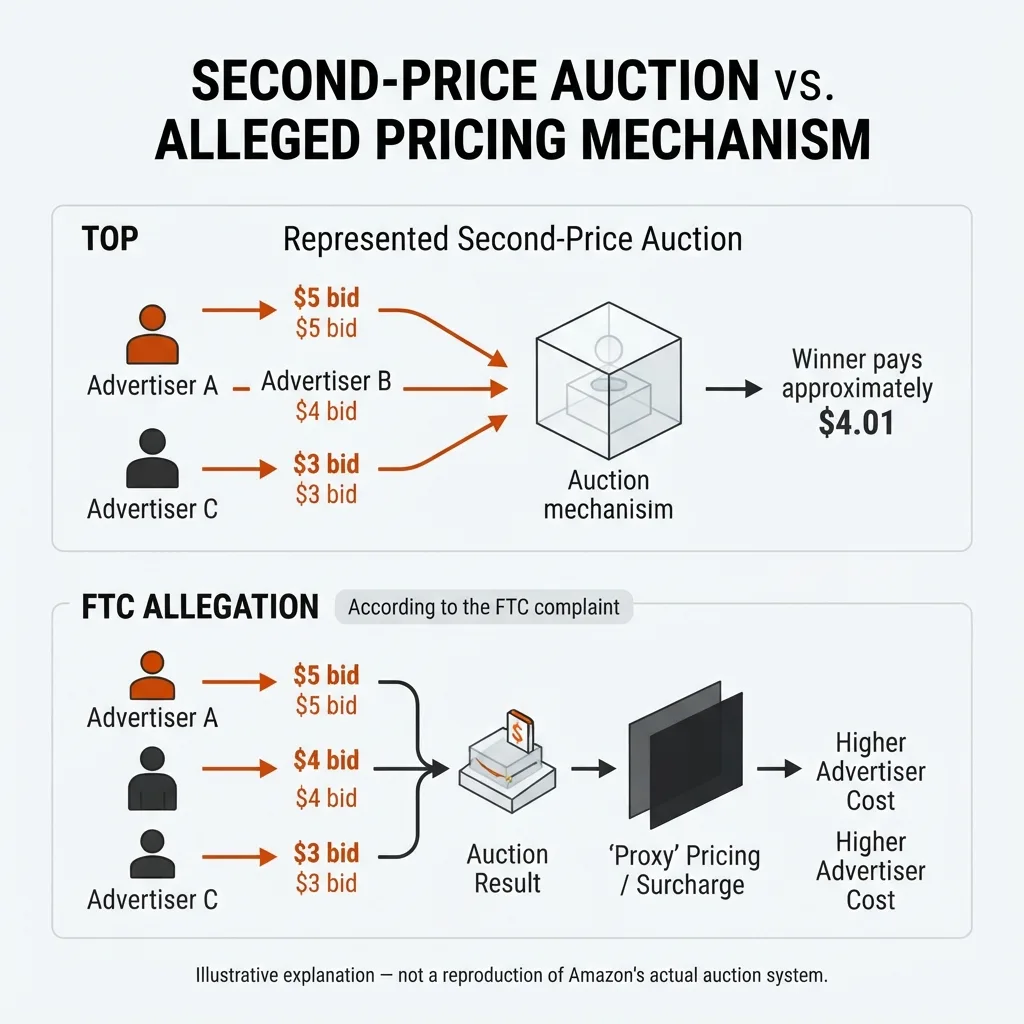
For over seven years, the platform had marketed its Sponsored Ads system as a "generalized second-price" (GSP) auction. In a standard GSP auction, the highest bidder wins but only pays one cent above the second-highest bid. The FTC's complaint alleges that in 2019, the platform changed the rules without telling advertisers.
Specifically, the FTC says the platform introduced an undisclosed mechanism it internally called a "soft reserve price", which effectively allowed the platform to charge the winning advertiser more than what standard second-price auction mechanics would have produced.
According to the FTC complaint, internal communications between ad executives show the platform "made this surreptitious change to its auction because it was unhappy about how much revenue its advertising auctions were generating."
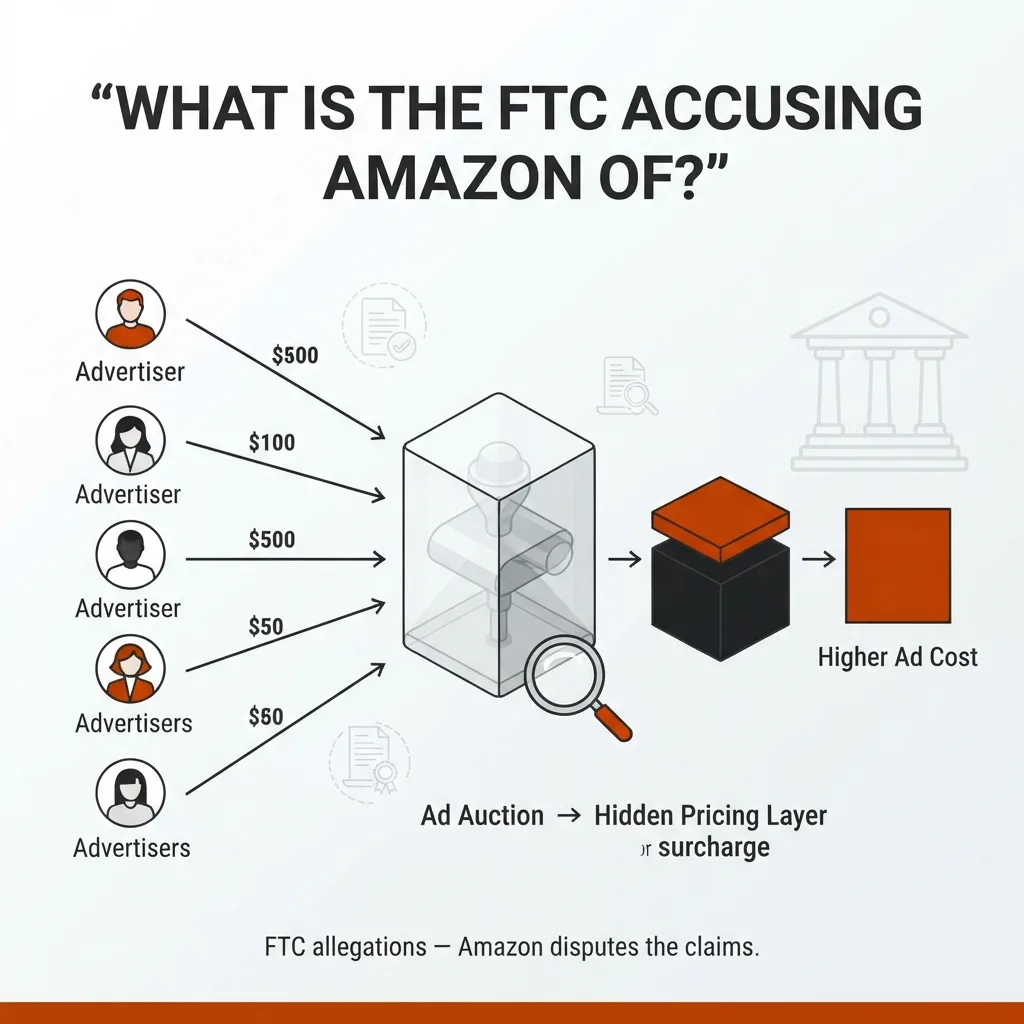
The core allegation, simplified:
- Platform tells sellers: "You only pay the least amount needed to win"
- Platform allegedly charges: The winning bid amount, inflated by an undisclosed reserve price mechanism
- Result: Sellers overpaid by an estimated $20 billion across 1.2 million advertisers
This case is separate from the 2023 antitrust lawsuit, which covers broader marketplace competition issues and is scheduled for trial in early 2027. The new 2026 case focuses specifically on Sponsored Ads auction pricing.
What the Platform Says in Its Defense
The platform vehemently denies the allegations and argues its auction system has saved advertisers billions of dollars while improving performance.
The platform's official response makes three main claims:
- Average winning bids fell 50 percent from 2019 to 2025 on Sponsored Products search ads
- Advertisers saved an estimated $8 billion from 2021 to 2025 because the system prioritizes ad relevancy over highest bid
- In 2026, the platform estimates advertisers will achieve 58 percent higher sales and 46 percent better ROAS due to the relevancy-first model
The platform also argues that roughly 92 percent of placed ads are not given to the highest bidder, which it says demonstrates a commitment to relevancy over revenue extraction.
The platform's legal position: a bid was always communicated as a maximum charge, not a guaranteed second-price outcome. It argues the FTC is misreading how complex auction systems actually work.
The dispute in plain terms:
| Claim | FTC Position | Platform Position |
|---|---|---|
| Auction type | Represented as second-price, ran differently | Maximum CPC, never promised second-price |
| Surcharges | Hidden, undisclosed, cost sellers $20B | Reserve prices are standard, kept CPCs lower |
| Seller impact | Massive overpayment since 2019 | Sellers saved $8B due to relevancy model |
| Consumer impact | Higher product prices passed through | Better ad relevance benefits shoppers |
Both sides have significant legal arguments. The court will decide, not a press release.
How This Could Affect Your CPC and ACoS
Right now, nothing has changed in how the auction system operates. The lawsuit is in its early stages. Courts do not modify how live commercial systems function during litigation.
However, there are three ways this case could affect your advertising economics in the medium term:
1. Potential Transparency Changes
If the court or a settlement forces the platform to disclose more about its auction mechanics, sellers would gain clearer insight into why specific clicks cost what they cost. This could make bid optimization more precise and ACoS targets more accurate.
2. Structural Auction Reform
A ruling against the platform could require changes to the underlying auction model. If the soft reserve price mechanism is deemed deceptive and must be removed, the change could lower effective CPCs for some keywords. There is no guarantee this happens or on what timeline.
3. Advertiser Refund Program
If the FTC prevails, a refund or restitution program covering the alleged $20 billion overcharge period (2019 to present) becomes possible. The FTC has pursued such programs in prior deceptive pricing cases. No such program exists today, and sellers should not assume one will materialize.
The honest short-term assessment: your CPC today is set by the same auction mechanics that have been operating since 2019. The lawsuit documents what may have happened. It does not change what is happening now.
What Sellers Should Monitor
Track these four areas closely as the case develops:
Performance Metrics to Watch
If the lawsuit leads to any settlement or system modification, you would expect to see shifts in:
- Average CPC by keyword cluster: A systemic change to reserve price mechanics could affect CPC levels unpredictably across categories
- Impression share for the same bid: If the auction model changes, existing bid levels may produce different impression and click volumes
- ACoS at account level: If effective CPCs shift downward due to reform, account-level ACoS would improve without any campaign change on your part
Legal Developments to Watch
| Milestone | Expected timing | Seller relevance |
|---|---|---|
| Platform motion to dismiss | Late 2026 or early 2027 | Determines whether case proceeds |
| Discovery phase | 2027 | Internal documents become public, revealing actual auction mechanics |
| Broader antitrust trial | Early 2027 | Separate case, but overlapping platform power questions |
| Potential settlement discussions | Any time | Could include refund mechanism for prior advertisers |
Practical record-keeping step: The FTC complaint covers the period from 2019 to present. Preserve your campaign invoices, monthly advertising billing statements, and account-level spend records for this full period. If a refund program is established, documented spend history will be the basis for any claim.
Should You Change Your PPC Strategy Right Now?
No. Do not alter your PPC strategy based on an unresolved lawsuit. Your CPC today reflects the same auction mechanics as yesterday. Pulling back on advertising while competitors maintain spend is a self-inflicted disadvantage with no legal rationale.
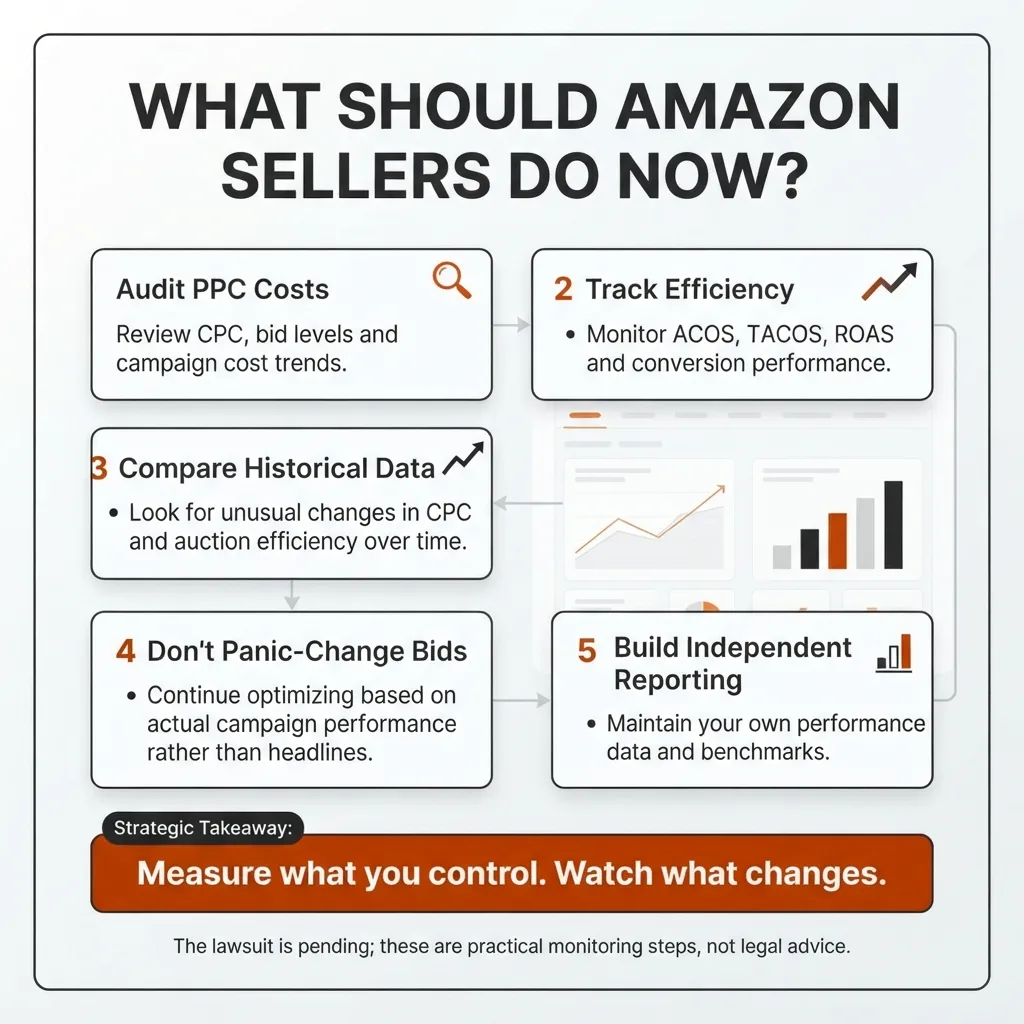
Here is the correct approach for sellers right now:
What to Keep Doing
- Optimize your listings for CVR. This reduces ACoS regardless of what CPCs do. A listing converting at 12 percent versus 8 percent cuts effective ACoS by one-third at identical CPCs.
- Manage bids against your break-even ACoS. Your break-even is anchored to your contribution margin, not to what the platform's auction should theoretically charge.
- Run weekly negative keyword management. This is the fastest non-lawsuit-dependent way to reduce wasted spend right now.
- Monitor TACoS weekly. If the lawsuit or any resulting system change affects organic rank or conversion signals, TACoS will show the impact before ACoS does.
What to Prepare (Not Act On)
- Document all advertising spend since 2019. Monthly Seller Central billing records and advertising console reports. Export and store externally.
- Register for any FTC seller notification list if one is established. The FTC typically notifies affected parties through official channels once a case reaches settlement or remedy phase.
- Follow trade press for settlement signals. Agreements in cases like this are often announced before formal court orders.
What Not to Do
- Do not reduce advertising budgets based on the lawsuit. Competitive dynamics do not pause for litigation.
- Do not assume CPCs will fall in the near term. Any structural change is at minimum 12 to 24 months away if it happens at all.
- Do not conflate this case with the 2023 antitrust suit. They are separate complaints with different allegations and different remedies.
The Broader Context: Amazon Under Mounting Regulatory Pressure
This lawsuit does not exist in isolation. The platform reached a $2.5 billion FTC settlement in September 2025 over deceptive Prime subscription practices. It is also facing the 2023 antitrust case covering marketplace seller rules and pricing algorithms, scheduled for trial in early 2027.
The pattern of regulatory action is relevant to sellers for one practical reason: the platform has already demonstrated a willingness to modify practices under regulatory pressure. It recently dropped a planned 2 percent fee on sellers who do not use its shipping services, a move widely interpreted as a response to the scrutiny of its third-party seller practices.
This makes it reasonable to expect that some combination of transparency improvements, auction mechanism disclosures, or seller-facing changes could emerge from the 2026 advertising lawsuit as well, regardless of how the court ultimately rules.
Google precedent matters here. In April 2026, a US District Judge ruled that Google willfully engaged in anticompetitive acts in its ad tech markets. That ruling followed years of litigation and may influence how courts evaluate similar digital advertising auction conduct. The FTC is likely aware of this and has structured its complaint accordingly.
Key Takeaways for Sellers
Here is the priority list for sellers managing active PPC campaigns right now:
- Do not change your campaign strategy. The auction system has not changed today.
- Preserve all advertising records from 2019 to present. Monthly billing statements and campaign performance exports.
- Continue optimizing for CVR. This reduces ACoS independent of CPC levels.
- Monitor official FTC communications for any refund or notification program.
- Watch CPCs by keyword cluster monthly. Any structural auction change would show here first.
- Track TACoS weekly. It will show broader impact faster than ACoS alone.
- Do not assume a refund. No program exists yet. Plan your business around current economics.
The FTC's complaint is serious, well-documented with internal company communications, and is supported by 22 state co-plaintiffs. The platform's defense is also substantive. This case will take years to resolve. Your business needs to perform well in the meantime.
Want help auditing your PPC account for efficiency opportunities that are available right now, independent of any lawsuit outcome?
At Brevlin, we run full advertising audits that identify where your ad spend is leaking, how your ACoS compares against your true break-even, and which structural changes to your campaign architecture would produce measurable improvement in the next 30 days, regardless of what any court decides.
A complete breakdown of the FTC and 22-state advertising auction lawsuit filed against the platform on August 31, 2026, covering what the complaint actually alleges (hidden soft reserve price mechanism adding $20B in charges since 2019), the platform's defense (50 percent CPC decline, $8B advertiser savings, 58 percent higher sales from relevancy model), how the case could affect CPC and ACoS in three scenarios, four areas sellers should monitor, a seven-point action priority list for current PPC strategy, and the broader regulatory context including the 2025 Prime settlement and 2027 antitrust trial.
The FTC lawsuit filed on August 31, 2026 raises a question every seller running Sponsored Ads should take seriously, if the complaint is accurate, you may have been paying significantly more than the stated auction price for years without knowing it. That does not change what you should do today, which is run your best campaigns as efficiently as possible. But it does matter for how you interpret historical ACoS data and how you should document your advertising records going forward in case a refund program emerges from the case. The practical advice has not changed, optimize your listings, improve your CVR, manage your bids against your break-even ACoS. The legal case will run for years. Your Q4 will not wait for it. — Maimoona Iqbal (Marketplace Growth Specialist)
Artikel fertig. Du hast gerade 10 Minuten in dein Wissen investiert.
Häufig gestellte Fragen
On August 31, 2026, the FTC and 22 state attorneys general filed a lawsuit alleging the platform secretly manipulated its Sponsored Ads auction system since 2019 by adding an undisclosed mechanism called a 'soft reserve price' that pushed final CPCs above what a standard second-price auction would have produced. The complaint alleges this generated more than $20 billion in excess charges from over 1.2 million advertisers. The platform denies the allegations and says its auction system has saved advertisers $8 billion and improved their ROAS.
Nothing has changed today. The lawsuit is in its early stages and courts do not modify live commercial systems during litigation. The same auction mechanics that have been operating since 2019 are operating now. Do not change your PPC strategy based on an unresolved lawsuit. Continue optimizing for CVR, managing bids against your break-even ACoS, and running weekly negative keyword maintenance.
The complaint covers 2019 to the present. Export and store your monthly advertising billing statements and campaign performance reports for this full period, saved externally outside Seller Central. If the FTC prevails and a refund or restitution program is established, documented spend history from the covered period would form the basis for any claim. No refund program exists today.
Watch average CPC by keyword cluster monthly for any unexpected shifts. Monitor impression share for the same bid levels. Track TACoS weekly as it will show broader impact faster than ACoS alone. Follow official FTC communications for any settlement announcement or notification program. The most significant structural changes, if any result from the case, are at minimum 12 to 24 months away.
This is a separate case filed in 2026 specifically about Sponsored Ads auction pricing. The 2023 antitrust case covers broader marketplace conduct including seller rules and pricing algorithms and is scheduled for trial in early 2027. Both cases involve platform power but have different complaints, different state coalitions, and different potential remedies. Do not combine them when assessing the risk to your selling operation.


