
Q4 is not just a busier version of the rest of the year. It is an entirely different advertising environment. Rising CPCs, shifting buyer intent, and compressed decision windows mean the PPC strategies that worked in June will quietly drain your budget in November. Here is how to build a system that wins.
- Q4 PPC requires a completely different strategy, CPCs rise 25 to 40 percent while buyer intent becomes urgency-driven and gifting-focused, demanding funnel-aligned campaigns rather than scaled-up evergreen ones
- The 70/20/10 budget framework (core campaigns, growth testing, branding) prevents oversaturation while preserving room to discover and validate new converting keywords before peak weeks
- Campaign timing across October, November, and December must match the three phases of Q4, foundation-building, peak-push, and conversion focus
- Creative must reflect the holiday season across every ad format; sellers who don't refresh creative for Q4 lose clicks before they can compete on bids
- Post-Q4 transition strategy is as important as Q4 itself; retargeting holiday buyers in January and shifting to resolution-intent keywords turns one-time shoppers into long-term customers
Introduction
Every year, Q4 reshapes the paid advertising landscape for marketplace sellers. Ad costs climb sharply, competition intensifies, and buyer behavior shifts in ways that catch most sellers off guard. In 2026, these shifts will be more pronounced than ever. The holiday season is no longer just about generating traffic. It is about managing ad efficiency, aligning with shopper intent at every stage of the funnel, and ensuring that every dollar invested in PPC contributes to measurable, scalable growth.
Many sellers walk into Q4 overconfident, assuming the same strategies that delivered in Q2 or Q3 will hold up under peak season pressure. That assumption is costly. Q4 is not business as usual with higher traffic. It is a different battlefield entirely. Stakes are higher, margins are thinner, competition is fiercer, and the risk of burning through budget without a structured funnel is greater than at any other point in the year.
The most common mistake sellers make is binary: they either overspend chasing impressions during the peak weeks, or they underspend out of fear and miss critical sales windows. Neither extreme works. The sellers who win in Q4 find the discipline to balance spend, intent, and funnel structure in a way that captures both holiday-driven demand and long-term customer value.
This guide breaks down how to master marketplace PPC for Q4, covering budget frameworks, funnel strategy, keyword management, creative optimization, timing, monitoring cadence, and post-peak transition. By the end, you will have a complete operational playbook that tells you when to push hard, when to pull back, and how to build a campaign system that drives profit rather than just traffic.
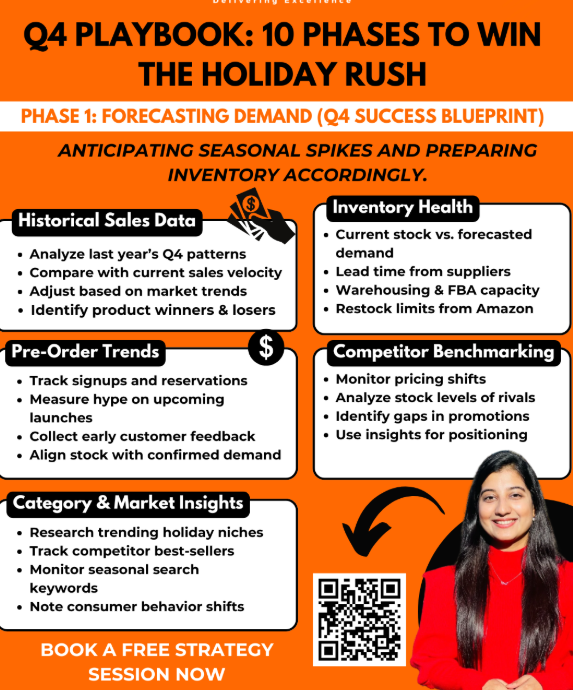
1. Why Q4 PPC Requires a Completely Different Approach
Q4 is unlike any other quarter in marketplace advertising. Ad inventory becomes more expensive while shopper behavior transforms simultaneously: urgency, gifting intent, last-minute buying, and deal-seeking dominate the marketplace in ways that are completely absent for the rest of the year. Sellers who fail to adapt to this environment risk running campaigns designed for a different buyer in a radically different context.
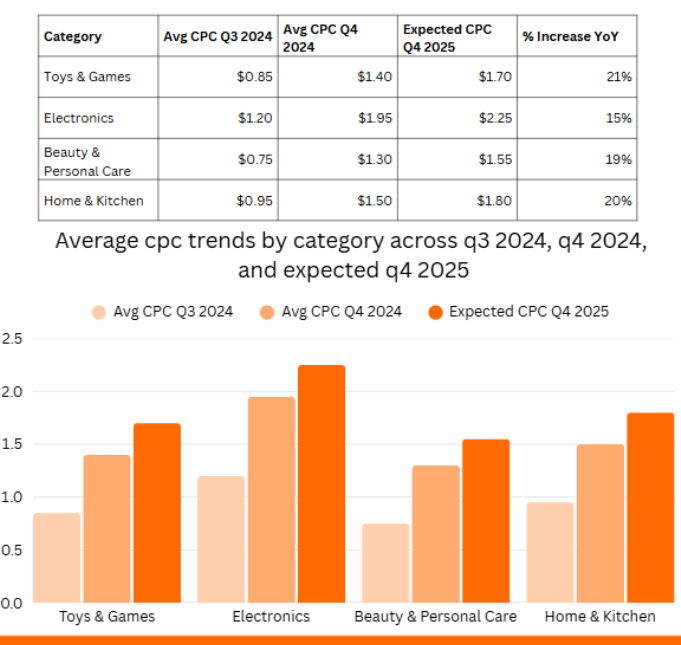
The numbers are unforgiving. CPCs typically rise 25 to 40 percent across competitive categories in November and December. However, conversion rates can double on peak shopping days like Black Friday and Cyber Monday, meaning the sellers who time their spend correctly earn disproportionate returns. The problem is that ad waste also increases dramatically if campaigns are not segmented by intent and calibrated to the timing of different buyer stages.
Perhaps the most important mindset shift for Q4 PPC is this: it is not about winning the click. It is about earning the right click. That requires campaigns to go far beyond keyword volume, focusing instead on buyer context, moment, and readiness to purchase. Sellers who bring this level of precision to Q4 consistently outperform those who simply increase budgets and hope for the best.
Starting campaigns at least two to three weeks before major shopping events is critical. The algorithm rewards listings with consistent traffic and engagement history, which means sellers who begin building click and conversion data in early October enter peak weeks with better placement, lower effective CPCs, and stronger organic rank than those who wait for the rush to arrive.
2. Budgeting for Q4: The 70/20/10 Framework
The most common reason sellers overspend in Q4 without commensurate returns is the absence of a budget structure tied to intent layers. Without a framework, ad dollars flow into the path of least resistance, which is often broad match terms that generate impressions but not conversions.
A proven approach is the 70/20/10 budget allocation framework:
70 percent toward core converting campaigns. These are your proven keywords on exact match, your top-performing ASIN targeting, and your highest-converting product campaigns. This is where your budget should be concentrated because these campaigns have demonstrated their ability to turn clicks into sales. Protect this allocation aggressively.
20 percent toward growth testing. This is where you experiment with long-tail holiday keywords, seasonal gift phrases, competitor targeting, and broader match types. The goal is to discover new converting terms before peak weeks arrive, not to generate volume. Any keyword that demonstrates strong conversion here during October and early November should be migrated into the core 70 percent before Black Friday.
10 percent toward branding and defensive spend. Sponsored Brand ads, Sponsored Brand Video, and defensive product targeting to block competitors from appearing on your own listings. This protects your visibility, builds brand equity, and prevents competitors from intercepting buyers who are already looking at your products.
This framework prevents oversaturation while preserving the flexibility to experiment. Sellers who allocate blindly end up pushing the majority of their budget into broad terms that drive CPC spikes without reliable ROI.
An additional budget consideration: earmark a supplemental reserve specifically for the BFCM weekend and the week before Christmas. These are the highest-intensity windows of Q4, and campaigns that run out of daily budget in the early afternoon on Black Friday miss an enormous volume of sales.
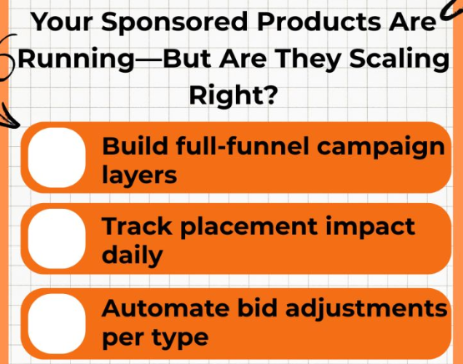
3. Funnel-Based PPC: Meeting Buyers Where They Actually Are
Holiday shoppers are not a monolithic group. In October, many are browsing for gift inspiration with no specific purchase intent. By the week before Christmas, they are panic-buying with overnight shipping in mind. A single campaign structure cannot effectively serve both of these buyers simultaneously.
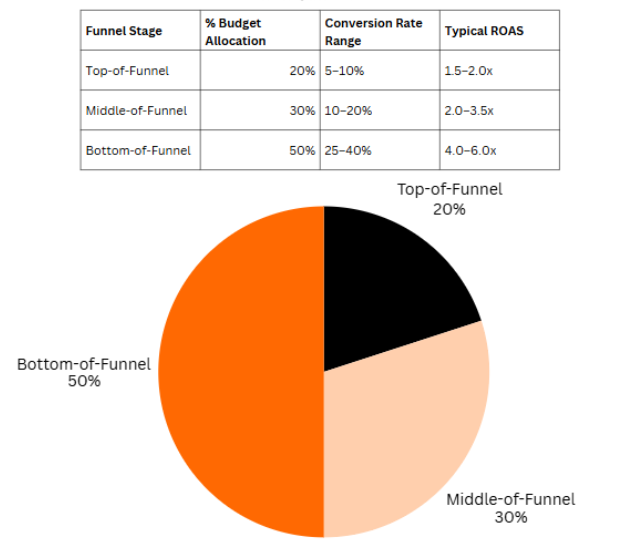
The solution is a funnel-based approach that aligns ad strategy with the distinct stages of buyer intent across Q4:
Top of Funnel (Awareness): Broad match holiday keywords, seasonal gift phrases, and category-level discovery campaigns. The goal at this stage is not immediate conversion but reach and relevance building. This is where you introduce your product to shoppers who may not be specifically searching for it yet. Sponsored Brand ads and Sponsored Display work well here because they surface your product in discovery contexts.
Middle of Funnel (Consideration): Competitor targeting, category ASIN targeting, and Sponsored Brand Video. Buyers at this stage are actively comparing options. Your ads need to communicate differentiation, not just visibility. Sponsored Brand Video earns particular attention because it often delivers lower CPCs than Sponsored Products while creating a stronger impression in a crowded search environment.
Bottom of Funnel (Conversion): Exact match high-intent keywords, branded search campaigns, and retargeting via Sponsored Display. This is where budget efficiency is highest and where the majority of your core 70 percent allocation should be concentrated. Retargeting is especially powerful here. Shoppers who viewed your product but did not purchase are already warm, and a well-timed retargeted ad with a coupon or urgency message converts at significantly higher rates than cold traffic.
Think of abandoned cart shoppers as your highest-priority Q4 audience. Offering a modest 10 to 15 percent discount to buyers who added your product to cart but did not complete the purchase is one of the highest-ROI tactics available during peak season, because these shoppers have already signaled strong intent.
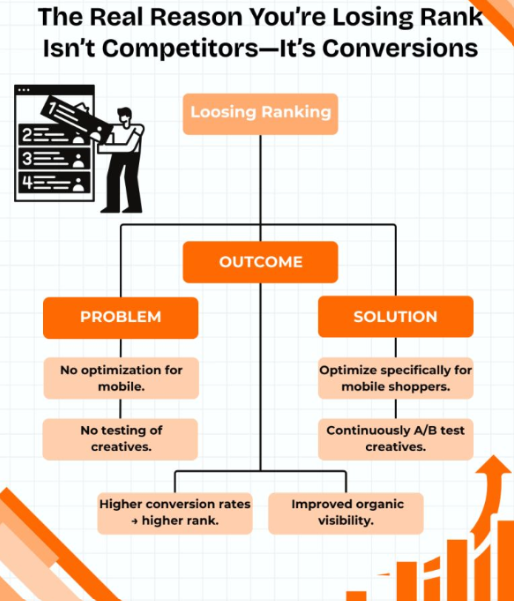
4. Timing Your Q4 Campaign: Month by Month
Q4 is not a single season. It is a progression across three distinct phases, each requiring a different campaign posture.
October: Build Foundations Before the Rush
October is the setup month. CPCs are still relatively reasonable, competition has not yet peaked, and this is the best window to test new creatives, establish seasonal keyword performance data, and build organic rank ahead of peak traffic.
Key priorities for October:
- Launch seasonal keyword campaigns and gather conversion data before BFCM
- A/B test Sponsored Brand headlines and main images for holiday messaging
- Build organic rank with top-of-search placement modifiers on proven keywords
- Separate seasonal campaigns from evergreen campaigns so you can manage them independently without performance bleed
- Submit Lightning Deals and promotional applications before platform deadlines close
The sellers who treat October as a data-building month enter November with proven creative, ranked keywords, and campaign structures that are ready to scale, rather than scrambling to set things up while CPCs are already elevated.
November: Peak Push and BFCM Dominance
November is the highest-stakes month of Q4. Prime Big Deal Days, Black Friday, and Cyber Monday all fall within a 30-day window. This is when you ramp spending on proven keywords from October, increase daily budgets to prevent early depletion, and shift focus decisively toward conversion.
Key priorities for November:
- Ramp budgets by 10 to 20 percent incrementally on top-performing campaigns in early November, not all at once on November 1
- Use dayparting to concentrate spend during peak shopping hours, typically 7 to 10 PM when evening conversions spike
- Monitor ACoS daily and bid adjustments weekly, but avoid making major structural changes that could trigger performance resets during the highest-volume days
- Activate BFCM promotional offers (Lightning Deals, coupons, bundles) at least 48 hours before the event to allow index time
- Keep your supplemental budget reserve ready to deploy when campaigns hit their daily caps prematurely
During Black Friday and Cyber Monday specifically, CPCs can spike 20 percent or more above the already-elevated November average. This is not the time to experiment with new keywords or campaign structures. Focus entirely on executing your proven setup at maximum efficiency.
December: Conversion Focus and Last-Minute Urgency
Early December continues strong holiday buying momentum. The strategic shift here is toward bottom-of-funnel emphasis and last-minute urgency messaging as shipping cutoff dates approach.
Key priorities for December:
- Lead ad copy and Sponsored Brand headlines with delivery guarantee messaging ("Arrives before December 25")
- Scale back TOF broad match campaigns as gifting-specific keyword intent peaks and then fades after the shipping cutoff date
- Shift Sponsored Display retargeting into its highest-volume allocation to recapture shoppers who browsed but did not convert in November
- After December 20, transition messaging toward digital gifting, gift cards, and self-purchase positioning for those who missed the main event
5. Creative Optimization for Q4 Ads
Holiday buyers expect more from ads than they do for the rest of the year. Generic creative that performs acceptably in February feels flat and unconvincing when shoppers are surrounded by seasonal messaging from every direction. Sellers who don't adapt their creative for Q4 lose clicks before they even have the chance to compete on bids.
Sponsored Product ads: Although they don't carry custom copy, your main image and title are what the shopper sees. Both should reflect seasonal relevance. A title updated to include gift-signal keywords and a main image optimized for mobile display work together to increase CTR in search results.
Sponsored Brand headlines: These should center on gifting themes and urgency. Headlines like "The Perfect Holiday Gift, Delivered Fast" consistently outperform generic product descriptions during Q4. Test multiple headline variants in October so you know which performs best before you commit budget in November.
Sponsored Brand Video: This format deserves special attention in Q4. A 10 to 15 second video that leads with the gifting use case, shows the product in a holiday context, and closes with a clear call to action will consistently outperform static ads in the same placement. Video also tends to earn lower CPCs in Sponsored Brand placements because fewer sellers invest in it, creating a relative cost advantage.
Sponsored Display: Urgency is the primary message here. Language like "Arrives before Christmas" or "Ships in 1 to 2 days" combined with a product image in a festive context drives strong retargeting performance during the final two weeks of the season.
Refreshing creative weekly throughout November and December is not optional. Buyer behavior and competitive positioning shift week by week, and creative that outperformed in early November may feel stale by Cyber Monday.
6. Keyword Strategy: Layering Holiday and Evergreen Intent
One of the most common Q4 PPC mistakes is abandoning evergreen keywords entirely in favor of seasonal terms. This is a mistake that inflates spend and collapses performance once holiday-specific search volume fades.
The optimal approach is a layered keyword strategy that balances three types:
Evergreen exact match keywords form the foundation and should represent the majority of your budget. These are the terms that convert year-round and will continue performing after Q4 ends. Cutting them to fund seasonal experiments is a decision that damages rank and costs sales.
Holiday modifier keywords add seasonal relevance to your existing keyword set. Examples include adding "gift for" prefixes, "holiday," "Christmas," "stocking stuffer," and "last-minute gift" modifiers to your core search terms. These capture gifting intent without abandoning the proven structure.
Long-tail intent keywords identify shoppers with very specific needs: "gifts for coffee lovers under 30 dollars," "noise cancelling headphones for teens gift," or "eco-friendly kitchen gift idea." These terms have lower search volume but dramatically higher purchase intent and typically convert at far better rates than broad gift-category terms.
Negative keyword management is equally important. Seasonal campaigns will accumulate irrelevant search terms quickly in Q4. Reviewing search term reports weekly and adding negatives aggressively protects your budget from bleeding into unrelated queries that spike in holiday searches.
7. Monitoring Cadence: Daily, Weekly, and Event-Based Adjustments
In Q4, the wrong monitoring cadence costs money in both directions. Adjusting too slowly means wasting budget on underperforming campaigns for too long. Adjusting too aggressively and too frequently disrupts the algorithm's optimization process and destabilizes campaigns that are working.
The right cadence is structured and layered:
Daily monitoring should focus on spend pacing, ACoS trends, and budget depletion timing. If campaigns are running out of daily budget before peak shopping hours, that is a problem to fix before the next day, not the next week. Daily monitoring also catches suppression issues, inventory stockouts that should pause campaigns, and sudden CPC spikes that require immediate attention.
Weekly adjustments should cover bid changes based on conversion data from the past seven days, negative keyword additions from search term reports, and creative performance comparisons across Sponsored Brand variants. Bids should not be changed daily unless there is a dramatic performance signal, because the algorithm needs time to respond to any adjustment.
Event-based preparation means pre-loading campaign changes before BFCM and other high-traffic events, not adjusting during them. Making major structural changes to campaigns during Black Friday is one of the most common and costly mistakes sellers make. All bid adjustments, budget increases, and promotional activations should be in place at least 24 to 48 hours before a major event begins.
8. Post-Q4 Adjustments: Building Q1 Momentum
One of the most overlooked aspects of Q4 PPC strategy is the transition into January. Sellers who let December campaigns run unchanged into the new year often find themselves paying elevated CPCs for a buyer who no longer exists. The holiday gift-seeker has been replaced by a post-holiday value-hunter with completely different motivations.
The January transition requires a deliberate rebalancing:
Scale back TOF campaigns that were built around gift-specific keywords. Search volume for "holiday gift ideas" drops to near zero in the first week of January. Continuing to bid on these terms wastes budget immediately.
Shift to evergreen and resolution-intent keywords. After the holidays, buyer intent pivots toward fitness, self-care, organization, productivity, and home improvement. Sellers whose products fit these categories should update their keyword focus and ad copy to reflect this shift by January 2.
Retarget holiday buyers aggressively. Q4 buyers are the most expensive customers you will acquire all year, but they can become the most profitable if nurtured correctly. Running Sponsored Display retargeting campaigns toward shoppers who purchased in November and December with upsell, cross-sell, or subscription messaging in January converts these one-time buyers into long-term customers.
Analyze performance data before you change anything. Pull search term reports, campaign-level ACoS data, and conversion trends from October through December before restructuring anything. The data from Q4 is the richest performance intelligence available, and it should directly inform your Q1 keyword strategy, bid targets, and budget allocation decisions.
Conclusion
Marketplace PPC in Q4 is not about spending more. It is about spending with precision. Rising CPCs and volatile buyer behavior make it easy to burn through budget without generating returns. But with a structured funnel, a disciplined budget framework, intent-aligned targeting, seasonal creative, and the right monitoring cadence, sellers can not only survive Q4 but emerge from it with compounding advantages that carry into Q1 and beyond.
Think of Q4 PPC as a three-act relay race. October sets the foundation and gathers the data. November builds momentum and captures peak-season demand. December seals the win and transitions toward retention. Each phase requires precision, not guesswork, and each builds on the previous one.
The sellers who dominate Q4 are not the ones with the largest budgets. They are the ones who treat PPC as a system rather than a collection of campaigns, who align spend with intent at every stage of the funnel, and who prepare months in advance so they never have to scramble when the rush arrives.
The difference between thriving and burning out in Q4 comes down to structure, timing, and execution. Build your system now, and Q4 will be your most profitable quarter of the year.
---
Don't let your Q4 PPC budget go to waste while competitors capture the sales that should be yours.
At Brevlin, we build funnel-driven ad strategies designed to maximize ROI during the most competitive season of the year. From keyword architecture and seasonal creative to bid management, dayparting, and post-Q4 transition planning, we engineer campaigns that win sales while keeping costs under control.
A complete Q4 PPC playbook for marketplace sellers covering the 70/20/10 budget framework, three-stage funnel strategy, month-by-month campaign timing, keyword layering, creative optimization by ad type, monitoring cadence, and post-holiday Q1 transition strategy. Includes 5 FAQs and a CTA to Brevlin's PPC management services.
Every Q4 I watch sellers scale evergreen campaigns and call it a holiday strategy. Intent changes in November. Budgets should change with it, and the 70/20/10 split is the simplest discipline that survives the rush. — Maimoona Iqbal (Marketplace Growth Specialist)
Article complete. You just invested 16 minutes in learning something valuable.
Frequently Asked Questions
Ideally, August or September for structural setup and October for campaign testing and ranking-building. Sellers who wait until November are already competing at peak CPCs without the organic rank or performance history that earlier preparation delivers. The algorithm rewards consistency, and listings with established click and conversion data perform better at lower effective costs during peak weeks.
Allocate 70 percent to proven core converting campaigns (exact match, top-performing ASIN targeting), 20 percent to growth testing with holiday and long-tail keywords, and 10 percent to branding and defensive spend. Additionally, reserve a supplemental budget specifically for BFCM weekend and the week before Christmas, when campaigns frequently run out of daily budget before peak shopping hours.
Monitor spend pacing and ACoS daily, adjust bids based on weekly conversion data, and pre-load all major campaign changes at least 24 to 48 hours before major events like Black Friday. Making structural campaign changes during peak traffic days is one of the most common and costly Q4 mistakes, as it can destabilize campaigns when performance stability matters most.
Sponsored Brand Video earns particular attention because it tends to generate lower CPCs than Sponsored Products in the same placement, while creating a stronger impression. A short 10 to 15 second video showing the product in a holiday gifting context consistently outperforms static ads and is underutilized by most sellers, creating a relative cost advantage.
Retarget holiday buyers through Sponsored Display in January before adjusting anything else. These are your highest-acquisition-cost customers and can become your most profitable if nurtured correctly. Simultaneously, scale back gift-specific keyword campaigns, shift to resolution and evergreen intent keywords (fitness, organization, self-care), and use Q4 search term and conversion data to inform your Q1 bid strategy.


