
AI can scale your marketplace business, but automate the wrong things, and it can quietly erode your performance.
- Automate data analysis and reporting, but keep strategic decisions human-led
- Let AI optimize PPC bids and budgets within a campaign structure you design
- Use AI to draft listing copy, but always edit for brand voice and persuasion
- Protect creative, branding, and visual storytelling from full automation
- The winning approach in 2026 is a deliberate hybrid of AI efficiency and human judgment
Introduction
Artificial intelligence has become one of the most powerful tools available to online marketplace sellers in 2026. From keyword research and PPC bidding to pricing and analytics, AI now touches nearly every layer of seller decision-making. The sellers embracing it are moving faster, testing more efficiently, and spotting opportunities before competitors even notice them.
But a quieter problem is spreading alongside that progress: over-automation. Too many sellers are handing AI the keys without understanding where its judgment ends and human judgment needs to begin. The result is generic listings, wasted ad spend, and brands that all start to look, and sound, the same.
AI is exceptional at processing huge datasets, spotting patterns, and executing repetitive tasks at a scale no human team could match. What it still lacks is context, creativity, and long-term strategic instinct. Used carelessly, it optimizes for whatever metric is in front of it today, sometimes at the expense of where the brand needs to be in a year.
The sellers winning in 2026 aren't the ones who automate the most, they're the ones who automate deliberately. They know exactly where AI adds leverage and where a human needs to stay in the loop. That distinction is what separates brands that scale sustainably from those stuck cycling through inconsistent results.
Here's how to build that balance.
1. Automate the Data, Not the Decisions
AI is built for volume. It can surface trends in keyword performance, shopper behavior, and campaign metrics far faster than any analyst could manually.
Hand this to AI: - Keyword trend analysis - Search term harvesting - Competitor tracking - Performance dashboards
What shouldn't be fully automated is what you do with that data. An algorithm might flag a keyword for removal because its short-term ROI looks weak, without recognizing that keyword is quietly building long-term rank. A human still needs to weigh isolated metrics against the bigger picture.
2. Let AI Optimize PPC, But You Set the Strategy
Dynamic, AI-driven bidding is now standard practice, adjusting in real time based on conversion likelihood and competitive pressure.
AI handles well: - Bid adjustments - Budget allocation - Negative keyword discovery - Ongoing performance monitoring
What AI can't do is understand your brand positioning, where a product sits in its lifecycle, or your longer-term ranking goals. Campaign architecture and intent segmentation should be built by a human first, then optimized by AI inside that framework, not the other way around.
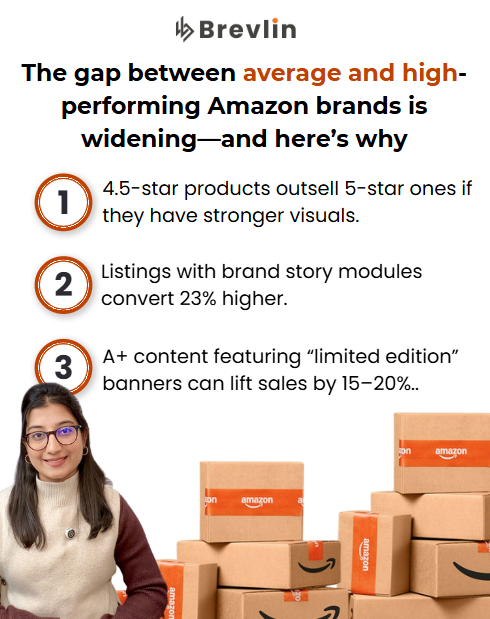
3. Use AI to Draft Listings, Not to Finalize Them
AI copywriting tools can produce titles, bullets, and descriptions in seconds, which makes them a genuinely useful starting point.
Best practice: - Let AI generate the first draft - Rework the messaging to match brand voice - Layer in insights pulled from real customer reviews
Listings written end-to-end by AI tend to read as technically sound but emotionally flat, optimized for the algorithm, not the buyer. Human editing is what turns a keyword-stuffed draft into copy that actually persuades.
4. Automate the Reporting, Not the Interpretation
AI can generate detailed reports on sales trends, profitability, and campaign health without much effort.
Automate: - Weekly performance summaries - KPI tracking (ACoS, TACoS, ROAS) - Inventory forecasting
But numbers alone don't tell the full story. A spike in ACoS could mean inefficiency, or it could mean you're deliberately investing in growth. AI often can't tell the difference; a human who understands the strategy behind the spend can.
5. Protect Creative and Branding From Automation
Perhaps the biggest mistake sellers make in 2026 is letting AI take over the creative side of the business, imagery, brand voice, storytelling.
AI-generated visuals and copy frequently lack distinctiveness, and in competitive categories that produces listings that blend into the crowd rather than standing apart from it. Creative work is where human judgment still matters most: - Brand positioning - Visual storytelling - Emotional connection with buyers
The strongest sellers use AI to generate insight, then rely on people to turn that insight into something genuinely differentiated.
Conclusion
AI is one of the most powerful tools a marketplace seller can have in 2026, but it was never meant to replace strategy. Sellers who automate without discipline tend to lose control of their brand over time. Sellers who pair AI's efficiency with human judgment build something that actually compounds.
The formula isn't complicated: automate the repetitive, data-heavy work, and keep a human firmly in charge of strategy, creative, and brand identity. AI should accelerate good decisions, not make them for you.
---
Don't let AI run your business, use it to scale it intelligently.
At Brevlin, we help sellers build hybrid strategies that combine AI-driven efficiency with expert-led execution. From PPC automation to listing optimization and growth planning, every decision we make is data-backed and strategically aligned.
Scale smarter. Stay in control. Win in 2026.
A breakdown of what online marketplace sellers should automate with AI in 2026 (data analysis, PPC bidding, reporting) versus what must stay human-led (strategic decisions, campaign architecture, creative and brand identity), with a closing pitch for Brevlin's hybrid AI and human service.
The accounts that win treat AI like a strong analyst, not a strategist. Let it crunch, draft, and adjust bids. Keep the judgment calls, the brand voice, and the category bets human. — Maimoona Iqbal (Marketplace Growth Specialist)
Article complete. You just invested 5 minutes in learning something valuable.
Frequently Asked Questions
Start with reporting and data analysis, then PPC bid adjustments inside a campaign structure you design. These are high-volume, rules-friendly tasks where AI outperforms manual work almost immediately.
Strategy, brand voice, and creative direction. AI can draft and optimize, but decisions about positioning, pricing philosophy, and visual identity need human judgment and accountability.
It can draft them. Publish only after a human edit for brand voice, specificity, and persuasion. Unedited AI copy increasingly sounds like every competitor using the same tools.
Set the structure yourself, give the AI narrow jobs with guardrails, and review outcomes weekly. Automation without oversight is how accounts drift into wasted spend and generic content.


