
AI can scale your marketplace business or silently sabotage it. With over 900,000 sellers adopting AI tools in 2025 alone, the difference between the two outcomes is no longer access to automation. It is whether the strategy, data quality, and oversight underneath the tools is strong enough to guide what they actually do.
- Over 900,000 sellers adopted AI listing tools in 2025, but adoption and effective use are not the same. Beginners average 41% ACoS versus 26% for advanced sellers, a gap driven by structural discipline, not tool access
- Optimizing for ACoS alone causes AI to reduce bids on ranking-critical keywords, stall organic momentum, and make TACoS worse even as campaign efficiency appears to improve. Sellers have documented 30% total revenue declines from ACoS-only optimization
- 20 to 40% of ad spend in unaudited accounts goes to irrelevant search terms, creating flawed training data for AI bidding systems. Data drift compounds the problem as buyer behavior and category dynamics change without the model updating
- March 2026 AI agent policy now requires all automated seller actions to flow through official API channels. Non-compliance triggers ASIN suppression, API access suspension, or account deactivation
- AI is a multiplier of what already exists in the account. Used without strategy, data quality maintenance, and regular human review, it scales the absence of strategy at automation speed
Introduction
AI has become the defining operational tool for marketplace sellers in 2026. Over 900,000 sellers adopted AI listing tools in 2025 alone. AI bidding systems now handle billions of dollars in ad spend. AI repricing tools process more than 1.7 million repricing events every single day. By any measure, adoption has crossed from early advantage into baseline expectation.
But adoption and effective use are not the same thing.
A growing number of sellers are implementing AI without understanding what it actually optimizes for, where its data comes from, or what happens when the inputs going into the system are wrong. The result is not neutral. Poorly configured AI does not simply fail to help. It executes the wrong decisions faster and at greater scale than any manual process could. It compounds errors rather than correcting them, and it does so quietly, often without any visible alarm.
The sellers consistently outperforming in 2026 are not the ones with the most automation. They are the ones who understand precisely where AI helps, where it needs guardrails, and where human judgment cannot be delegated. The gap between beginner and advanced sellers on this platform is increasingly a systems gap: beginners average an ACoS around 41%, while advanced sellers hold closer to 26%. That 15-point difference is not primarily a knowledge gap. It is a structural gap built through years of disciplined optimization and controlled automation use.
This article breaks down the eight most common AI mistakes marketplace sellers are making in 2026, with the data behind why each one damages performance, and what to do instead.
Mistake 1: Over-Automating Without a Strategic Foundation
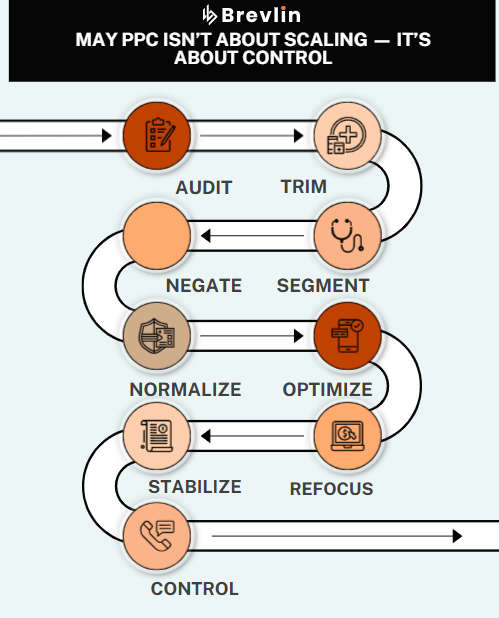
The most common AI mistake has nothing to do with the tools themselves. It is the assumption that automation can substitute for strategy.
Sellers who hand simultaneous control of PPC bidding, listing updates, and pricing to AI systems without defining clear campaign goals, segment roles, or performance benchmarks end up with systems optimizing against each other. The PPC tool lowers bids on a keyword the pricing tool just made more competitive. The listing tool updates copy based on keyword frequency data that the pricing shift has already made irrelevant. Each tool is executing correctly within its own logic. Together they are producing noise.
AI requires structured inputs to produce structured outputs. That means defining what each campaign is for (ranking, defense, profit harvesting), what metrics determine success at each product lifecycle stage, and what boundaries the system cannot cross. Without that structure, AI operates on isolated signals and optimizes toward local maxima that have nothing to do with the business's actual goals.
There are numerous documented cases of sellers who turned on full PPC automation, stepped away, and returned weeks later to find inflated spending or campaigns that had drifted far from their original intent. Automation should reduce operational effort. It should not remove oversight. Those are not the same outcome and confusing them is expensive.
Mistake 2: Optimizing for ACoS Instead of Profit
ACoS (Advertising Cost of Sale) is the most widely tracked metric in marketplace advertising, and in 2026 it is also one of the most misused.
ACoS measures efficiency within a campaign in isolation. It does not measure anything about organic sales, ranking momentum, or total business health. When sellers, or the AI tools they configure, optimize exclusively toward a lower ACoS, a predictable and damaging chain of events follows: bids are reduced on high-ACoS keywords, ad-driven sales velocity drops, keyword ranking momentum stalls, organic rank falls, organic traffic declines, and TACoS (total advertising cost as a percentage of all revenue including organic) worsens, even as campaign-level ACoS improves. There are well-documented cases of sellers who reduced ACoS from 25% to 18% and found total revenue had declined 30% over the same period.
The metric that tells you whether your advertising is actually building a business is TACoS. A falling TACoS alongside stable ACoS is the signal the system is working: ads are generating organic independence, not just buying paid traffic at full price. For mature products, a TACoS target below 10% indicates real operating leverage. If TACoS is rising while ACoS appears stable, organic sales are shrinking and the account is becoming increasingly dependent on paid traffic, which is expensive and fragile in an environment where average CPCs have climbed to $1.18 and are projected to push toward $1.25 by year end.
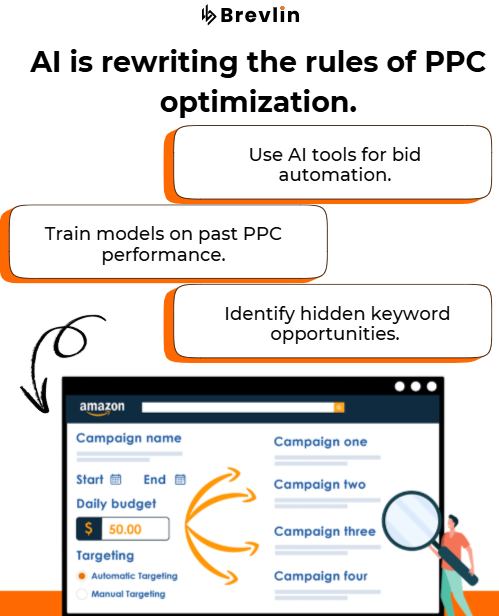
AI bidding tools need to be configured against the right objective. Feeding them an ACoS target without a TACoS guardrail produces campaigns that look efficient and erode the business at the same time.
Mistake 3: Publishing AI-Generated Content Without a Human Review Pass
In 2025, AI tools were used to create more than 12 million marketplace listings. By April 2026, a study analyzing over 500 listings across 10 product categories found that approximately 18% showed high-confidence signals of being generated from identical AI templates. Those listings were technically optimized. They were also demonstrably underperforming: compared to listings with lower AI scores, the most template-like listings showed 37% fewer reviews and lower average ratings, suggesting buyers are responding to the same generic signals in kind.
The problem is not that AI writes listings. The problem is that AI writes the same listing for everyone using the same tool with the same prompts. When outputs converge, differentiation disappears, and differentiation is what converts.
AI generates an optimized structural draft quickly. It surfaces keyword clusters efficiently. It can mine competitor reviews at scale and identify the objections buyers mention most. What it cannot do is explain why your specific product deserves to exist, reflect your brand's voice and positioning, or translate technical specifications into the emotional language that closes a buyer who has already seen six similar listings.
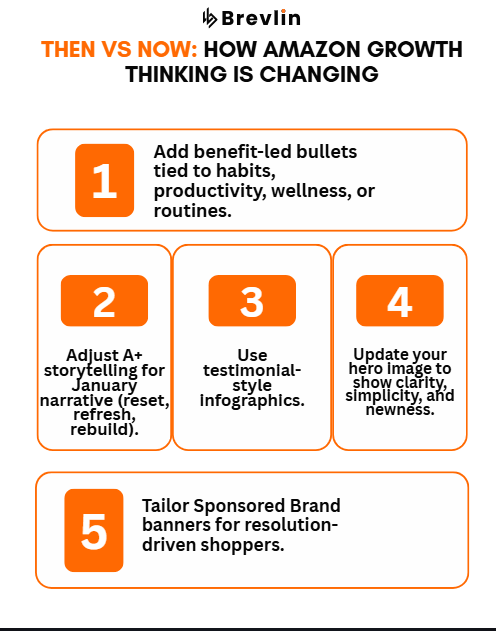
The correct workflow is simple but consistently skipped: AI generates the draft, a human rewrites every bullet through the lens of actual customer benefit and brand identity, and the output is tested against a defined brand voice guide before publishing. Replacing specification-only bullets with benefit-led copy addressing the top three buyer objections alone has been shown to drive an average 1.8 percentage point CVR improvement per ASIN within 4 to 6 weeks. That improvement is achievable. It requires a human in the loop.
Mistake 4: Ignoring Data Quality and Data Drift
AI systems are only as accurate as the data they process. This is understood in principle and consistently underestimated in practice.
In unaudited accounts, 20 to 40% of ad spend typically goes to irrelevant search terms: queries that generate clicks but no conversions. These terms are not just waste. They are noise. When an AI bidding system learns from campaign data that includes significant irrelevant traffic, it builds a flawed model of what converts and adjusts bids accordingly, compounding the problem rather than correcting it. The flawed signal produces flawed decisions, at automated speed.
Equally important and almost never discussed is data drift. Marketplace data is not static. Buyer behavior shifts seasonally, competitor behavior adapts continuously, and category dynamics change. A campaign structure configured in Q4 that was correctly optimized for holiday demand patterns will be operating on stale signals by February if the underlying data is not refreshed. AI does not automatically recognize when the conditions that trained it have changed. It continues executing against a model that no longer reflects market reality.
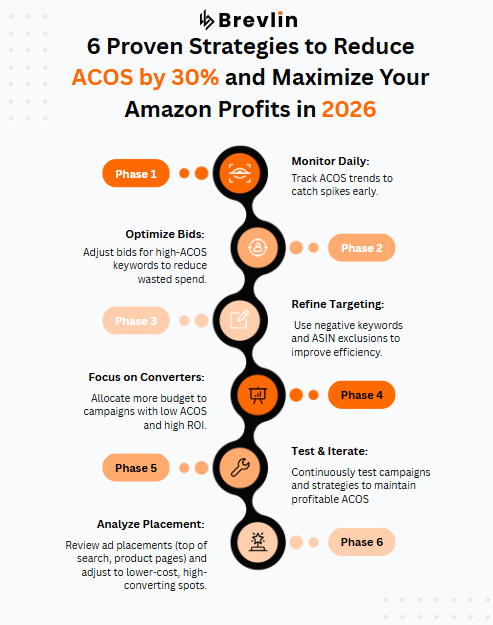
The operational fix requires consistent human maintenance: weekly negative keyword review (20 to 40% waste reduction is achievable within 60 days of systematic cleanup), monthly search term report audits to identify targeting drift, and regular data refreshes on keyword clusters and competitor positioning. AI performs the optimization. Humans maintain the data quality that makes the optimization meaningful.
Mistake 5: Automated Repricing Without Price Floors and Ceilings
Automated repricing without defined price boundaries is one of the most immediately damaging AI configurations a seller can run, and also one of the most common among sellers new to automation.
The failure mode is straightforward. A tool configured to always undercut competitors will do exactly that, in response to every competitor move, indefinitely. In multi-seller categories where multiple sellers are running the same configuration, this triggers the race-to-the-bottom dynamic that sellers implement repricing tools to avoid: cascading price reductions that compress margins to the point where winning the Featured Offer costs more than losing it.
In 2026, an updated platform policy from March explicitly introduced behavioral requirements for automated pricing tools, including rate limits on how frequently automated price changes can occur. Non-compliant automation now triggers ASIN suppression, API suspension for the tools involved, or in repeated cases, account deactivation. The new rules drew a clear line between authorized repricing through official API channels and any system operating outside those parameters.
The correct configuration requires two guardrails on every SKU. A price floor set at true unit cost (product cost plus FBA fees plus referral fees plus target margin), which must account for the January 2026 FBA fee increase of approximately $0.08 per unit average. And a price ceiling that prevents price spikes during competitor stockouts from crossing price parity thresholds that trigger suppression. Between those two boundaries, AI optimizes freely. Below the floor or above the ceiling, it should be blocked. The seller sets the boundaries. AI operates within them.
Mistake 6: Losing Brand Identity to AI Efficiency
AI optimizes for performance signals. It does not have opinions about what your brand should stand for, who your ideal customer is, or what distinguishes your product from the fourteen similar options on the same search results page.
Sellers who delegate listing copy, image briefs, A+ Content, and customer communication entirely to AI tools end up with technically compliant content that could have come from any seller in the category. In markets where roughly 18% of listings already look and sound the same, this is not a neutral outcome. It is a structural disadvantage that grows as category competition intensifies.
Brand identity is a moat. It is what protects against copycat competition, enables price premium, and generates the kind of customer recognition that produces organic repeat purchasing. Building and maintaining it requires human-led decisions that AI tools are not equipped to make: what this brand stands for, what tone it uses, what claims it makes and does not make, and how it positions against alternatives.
The practical solution is a brand voice document, even a simple one, defined before any AI tool is used to generate content. It should specify tone, technical depth, the types of proof the brand cites, and the positioning relative to category alternatives. Every AI content output runs through this document before publication. The brand guide provides the direction. AI executes within it.
Mistake 7: Running AI on a Set and Forget Basis
The second most common automation failure, after deploying without strategy, is deploying with strategy and then walking away.
AI systems are not self-correcting. When a repricing tool makes incorrect decisions based on a temporary competitor pricing anomaly, it continues making those decisions until a human reviews the output and intervenes. When a PPC automation tool shifts budget toward a keyword that spiked in conversion during a promotional period, it may hold that allocation long after the promotion ends and the conversion data has normalized. When buyer behavior shifts seasonally and the campaign data changes, the model trained on older data keeps executing against assumptions that no longer hold.
The platform itself reinforces the importance of monitoring. The algorithm now uses a trust recalibration process, continuously re-evaluating seller visibility, Featured Offer exposure, and ranking based on recent performance patterns. A single metric degradation, an Order Defect Rate spike, a late shipment increase, a conversion rate dip from a listing update gone wrong, can trigger a downward recalibration that compounds quietly without an alert. Sellers who check campaign dashboards weekly and review AI decision outputs regularly catch these shifts early. Sellers who check monthly often discover problems that have been compounding for weeks.
The practical cadence: ACoS and spend reviewed daily at the campaign level, TACoS and organic share reviewed weekly, full account audit and AI configuration review monthly. Each review should include a specific check of what the AI changed and why, not just whether aggregate performance looks acceptable.
Mistake 8: Using AI Without Understanding Your Own Business Numbers
This is the most foundational mistake and the one most overlooked in discussions about AI adoption.
AI cannot guide a business it does not understand toward goals the seller has not defined. If a seller does not know their contribution margin by SKU, they cannot configure an AI bidding system to optimize toward the right ACoS target, because that target is different for a 40% margin product than for a 20% margin product. If a seller does not know their customer repeat purchase rate, they cannot correctly evaluate whether a high ACoS on a subscription-adjacent product is acceptable as customer acquisition cost. If a seller does not understand their product lifecycle stage, they cannot tell an AI system when to spend aggressively on ranking versus when to pull back and harvest margin.
The danger of AI in the hands of a seller who does not know their own numbers is that it will produce confident outputs based on flawed inputs, and the seller will have no basis for evaluating whether those outputs are correct. The tools generate fast answers. Without business knowledge, there is no way to distinguish a fast correct answer from a fast wrong one.
Just 111 sellers generate 10% of the platform's US third-party revenue. The gap between that group and the median seller is not primarily a tooling gap. It is a data infrastructure and analytical discipline gap: the ability to see profitability across brands and SKUs in real time, make allocation decisions from complete information, and evaluate AI outputs against accurate baselines. AI is a multiplier. It scales what you already know, both the right decisions and the wrong ones.

Conclusion
AI is one of the highest-leverage tools available to marketplace sellers in 2026. Used correctly, it compresses weeks of work into hours, identifies inefficiencies no human review process could catch at scale, and enables optimization decisions faster than any manual system can match.
Used incorrectly, it does the same things in the wrong direction.
The difference is not access to better tools. Every serious seller now has access to essentially the same AI stack. The difference is whether the strategy, data quality, monitoring discipline, and business knowledge underneath the tools are strong enough to guide what the tools actually do.
AI makes you smarter when you bring something for it to work with. When there is no strategy underneath, it scales the absence of strategy. The goal in 2026 is not to automate more. It is to automate the right things, within the right guardrails, with regular human oversight of everything the system decides.
Stop Letting AI Make Decisions Your Business Cannot Afford
At Brevlin, we help sellers implement AI the right way: combining automation with expert strategy, clean data inputs, and the human oversight layer that separates scalable growth from quietly compounding mistakes.
A 2026 breakdown of the eight most costly AI mistakes marketplace sellers are making, backed by data on ACoS versus TACoS misalignment, ad spend waste in unaudited accounts, the template listing problem, repricing without guardrails, the March 2026 AI agent compliance policy, and why business knowledge is a prerequisite for effective AI use.
The sellers I see struggling most with AI are not the ones who refuse to use it. They are the ones who adopted it fastest without building the strategic layer underneath. AI reveals your blind spots faster than any manual process could. But if you do not know what you are looking for, it will also scale your blind spots faster than anything else. — Maimoona Iqbal (Marketplace Growth Specialist)
Article complete. You just invested 14 minutes in learning something valuable.
Frequently Asked Questions
The clearest warning signs are: ACoS improving while total revenue declines (the AI is optimizing campaigns at the cost of organic rank), TACoS rising week over week despite stable campaign spend (organic sales shrinking and dependence on paid traffic growing), Featured Offer win rate dropping without a clear pricing trigger (often a metrics issue the AI is not flagging), and listings generating traffic but not converting (AI is driving clicks to content it had no role in evaluating).
Weekly at minimum for ad performance and spend, with a specific review of what the AI changed and why. TACoS and organic share weekly. Full AI configuration and campaign structure monthly. Any significant platform change (fee updates, algorithm shifts, seasonal transitions) should trigger an additional review cycle regardless of schedule.
Start with your unit economics: product cost, all fees, and target margin. That number defines your price floor, the minimum price the repricing tool can ever reach. Then define your ceiling based on what your category will bear and your brand positioning. Configure AI to operate freely within that range. Never run automated repricing on any SKU without both boundaries set. Review floors quarterly as fees change, more frequently during promotional seasons where competitors may be pricing aggressively.
ACoS measures ad spend as a percentage of ad-attributed revenue only. It tells you nothing about organic sales. TACoS measures ad spend as a percentage of total revenue including organic. A falling TACoS alongside stable ACoS means your ads are building organic rank and the account is gaining operating leverage. A rising TACoS, even when ACoS looks healthy, means organic sales are declining and the account is becoming more dependent on paid traffic. For established products, target TACoS under 10%. During launch phases, a temporarily elevated TACoS above 20% is normal and expected as ranking is established.


